
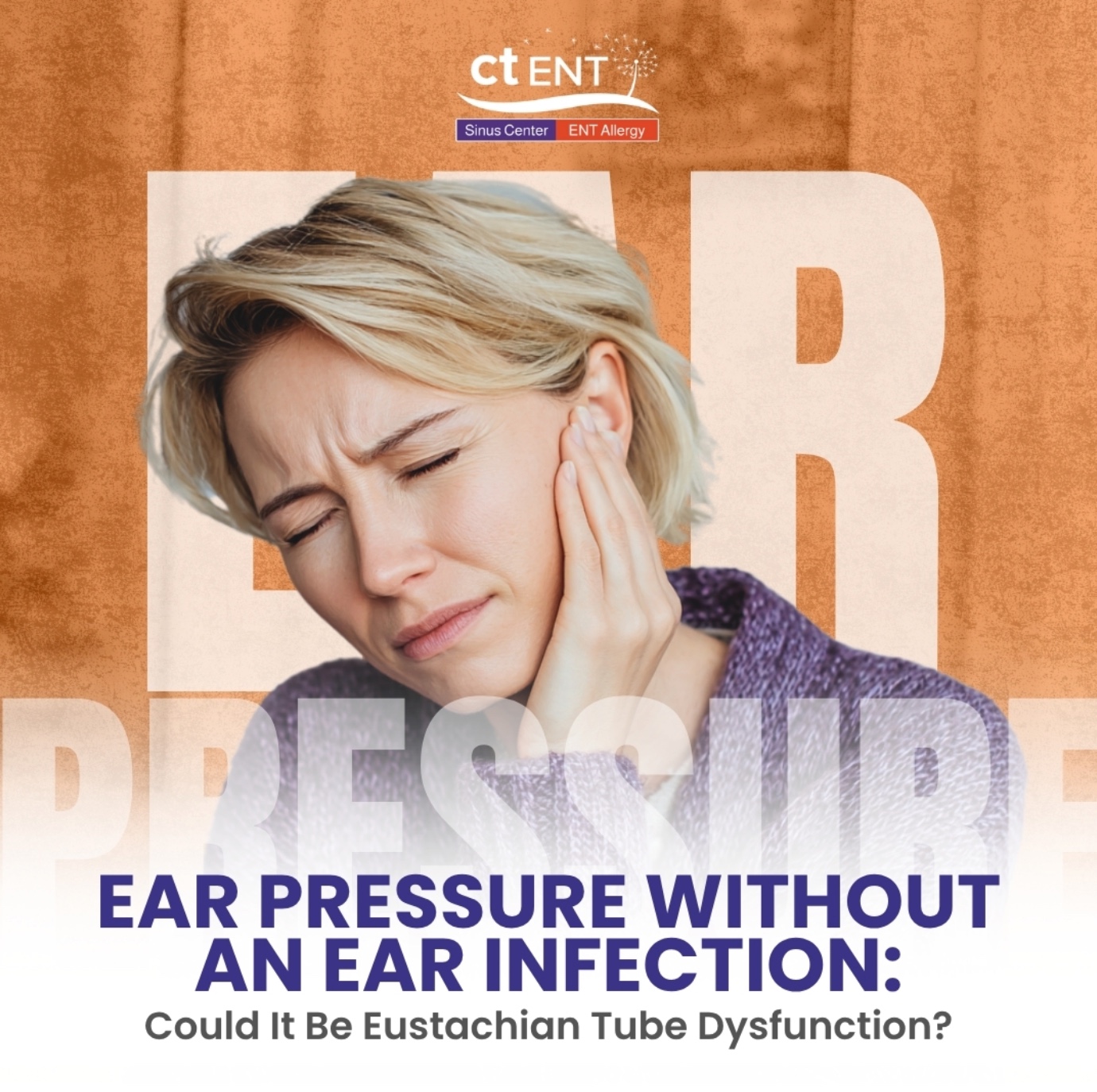
Ear Pressure Without an Ear Infection: Could It Be Eustachian Tube Dysfunction?
Ear pressure or a clogged sensation in the ears can be frustrating, especially when it affects your daily routine, concentration, sleep, or overall comfort.
Many people associate ear pressure or fullness with an ear infection. While infections can cause these symptoms, they are not the only possible explanation.
Ear pressure can also occur without an infection. In some cases, it may be associated with Eustachian tube dysfunction (ETD), a condition that affects how the middle ear regulates air pressure.
At CT-ENT, we help patients in Norwalk, CT, understand why ear pressure may develop without an infection, what symptoms could suggest ETD, and when an ENT evaluation may be appropriate.
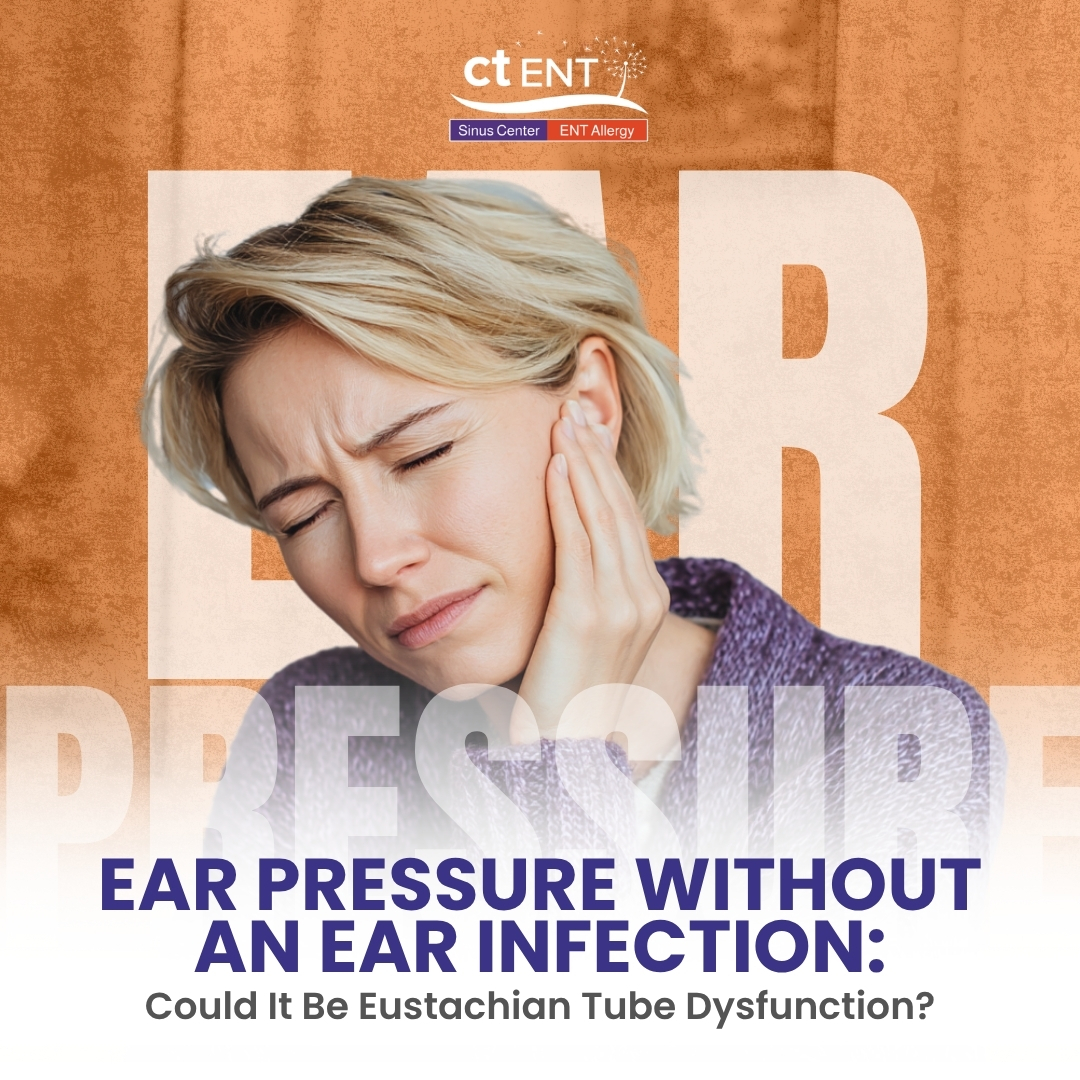
What Is Eustachian Tube Dysfunction (ETD)?
The Eustachian tubes are narrow passages that connect each middle ear to the back of the nose and upper throat. They help equalize air pressure, drain fluid from the middle ear, and protect the middle ear from substances in the nose and throat.
Normally, these tubes remain closed but briefly open when you yawn, chew, or swallow. This allows air to move into or out of the middle ear and helps maintain balanced pressure on both sides of the eardrum.
Sometimes, inflammation or other factors can interfere with the tubes' ability to open properly. This can make it difficult to regulate air pressure and drain fluid from the middle ear.
This condition is known as Eustachian tube dysfunction (ETD). When the tubes do not open adequately, it may be referred to as obstructive ETD.
ETD can contribute to symptoms such as ear pressure, fullness, muffled hearing, and discomfort.
What Are the Symptoms of ETD?
Symptoms of Eustachian tube dysfunction can vary from person to person.
Common symptoms may include:
- Muffled or reduced hearing
- A feeling of pressure or fullness in one or both ears
- A clogged or plugged sensation, sometimes described as feeling underwater
- Ear pain or discomfort
- Popping or crackling sounds in the ears
- Difficulty getting the ears to pop or clear
- Symptoms that become more noticeable during altitude or elevation changes
These symptoms may be associated with ETD, but they can also occur with other ear conditions.
Symptoms alone cannot confirm an ETD diagnosis. An ENT evaluation can help identify possible contributing factors and determine whether additional testing is needed.
How Can ETD Cause Ear Pressure Without an Ear Infection?
An ear infection is not necessary for pressure to develop in the middle ear.
When the Eustachian tubes do not open effectively, air pressure inside the middle ear may become different from the pressure in the surrounding environment.
This pressure imbalance can affect the movement of the eardrum and contribute to a sensation of fullness, pressure, discomfort, or muffled hearing.
ETD may also interfere with normal fluid drainage from the middle ear. In some cases, fluid can accumulate behind the eardrum.
However, fluid in the middle ear does not automatically mean an active ear infection is present. Fluid buildup can occur without infection, although the two conditions may sometimes occur together.
An ENT provider can examine the eardrum and middle ear to help determine whether symptoms are associated with ETD, fluid buildup, infection, or another condition.
What Causes Eustachian Tube Dysfunction?
Obstructive Eustachian tube dysfunction may develop when inflammation or swelling interferes with the normal opening of the Eustachian tubes.
Several conditions can contribute to this problem, including:
- Allergies: Allergic inflammation may cause swelling around the openings of the Eustachian tubes, making pressure regulation more difficult.
- Sinusitis: Inflammation involving the nose and sinuses may affect surrounding tissues and contribute to Eustachian tube symptoms.
- The common cold: Viral respiratory infections can cause temporary swelling and congestion in the nose and upper throat.
- Influenza and other respiratory infections: These illnesses may contribute to inflammation that affects Eustachian tube function.
Other factors, including anatomical differences or changes in the surrounding tissues, may also affect how the Eustachian tubes function.
Although acid reflux has been investigated as a possible contributor in some patients, its relationship with ETD is not fully established.
Not everyone with allergies, sinusitis, or a respiratory infection will develop ETD.
What Else Can Cause Ear Pressure Without an Ear Infection?
Eustachian tube dysfunction is only one possible explanation for ear pressure.
Other conditions may cause similar symptoms, including:
- Earwax buildup: Excess earwax can cause a plugged sensation and may affect hearing.
- Fluid buildup in the middle ear: Fluid may remain behind the eardrum even when an active infection is not present. This can sometimes be associated with ETD.
- Ear barotrauma: Changes in air pressure during flying, scuba diving, or mountain travel may cause ear discomfort or pressure.
- Temporomandibular disorders (TMD): Problems involving the jaw joint and surrounding muscles may cause discomfort or a sensation of pressure near the ears.
Because several conditions can produce similar symptoms, identifying the cause may require an examination rather than relying on symptoms alone.
How Is Eustachian Tube Dysfunction Evaluated and Diagnosed?
An ENT specialist can evaluate persistent or recurring ear pressure to determine whether ETD or another condition may be contributing.
During an appointment, your provider may:
- Review your symptoms, including when they started and how often they occur
- Ask whether symptoms worsen during flights, mountain drives, or other pressure changes
- Discuss recent respiratory infections, allergies, or sinus symptoms
- Examine your ear canals and eardrums
- Evaluate your nasal passages and the back of your nose and throat when appropriate
Depending on the examination findings, additional testing may be recommended.
Possible tests include:
- Hearing tests: These help evaluate hearing changes and determine whether additional investigation is needed.
- Tympanometry: This test measures how the eardrum responds to changes in air pressure and can provide information about middle-ear pressure and function.
Some patients may need additional evaluation depending on their symptoms and medical history.
No single symptom or test result establishes every type of ETD. Your provider will interpret the findings alongside your overall clinical picture.
When Is It Time to See an ENT Specialist for Ear Pressure?
Consider scheduling an ENT evaluation if you experience:
- Ear pressure or fullness that persists or repeatedly returns
- Ear pressure that is consistently more noticeable on one side
- Persistent ear pain or discomfort
- Hearing changes that do not resolve
- Ear pressure during nearly every flight or significant elevation change
- A clogged sensation that continues after a cold or nasal congestion has resolved
- Recurring ear symptoms associated with allergies or sinus problems
- Dizziness or ringing in the ears alongside persistent pressure
Persistent symptoms do not necessarily mean a serious condition is present. However, an evaluation can help determine whether treatment or additional testing may be appropriate.
When Should You Seek Urgent Medical Attention?
Some ear symptoms require more immediate evaluation.
Seek prompt medical attention if you experience:
- Blood, pus, or other fluid draining from the ear
- High fever accompanied by worsening ear symptoms
- Severe pain or swelling behind or around the ear
- Severe dizziness or vertigo
Sudden or rapidly developing hearing loss, particularly in one ear, requires immediate medical evaluation.
Sudden hearing loss can sometimes feel like a clogged ear or ordinary ear pressure. It should not be assumed to be caused by ETD or congestion, because certain causes of sudden hearing loss require time-sensitive assessment and treatment.
New facial weakness or other neurological symptoms also warrant emergency medical attention.
Conclusion: Understanding Ear Pressure and ETD With CT-ENT
Ear pressure does not always mean an ear infection is present.
Eustachian tube dysfunction is one possible cause of persistent fullness, pressure, or muffled hearing, particularly when the Eustachian tubes cannot effectively regulate middle-ear pressure.
However, earwax buildup, middle-ear fluid, pressure-related injury, jaw disorders, and other conditions may produce similar symptoms.
An ENT evaluation can help clarify what may be contributing to your symptoms and whether additional testing or treatment is appropriate.
CT-ENT provides ear, nose, and throat care services for patients in Norwalk and surrounding Fairfield County communities.
If you are experiencing persistent or recurring ear pressure, schedule a consultation with our team to discuss your symptoms, possible causes, and individualized management options.
