
What Happens to a PROPEL Sinus Implant After It Is Placed?
Having a sinus implant placed can raise an understandable question: What happens to it after surgery?
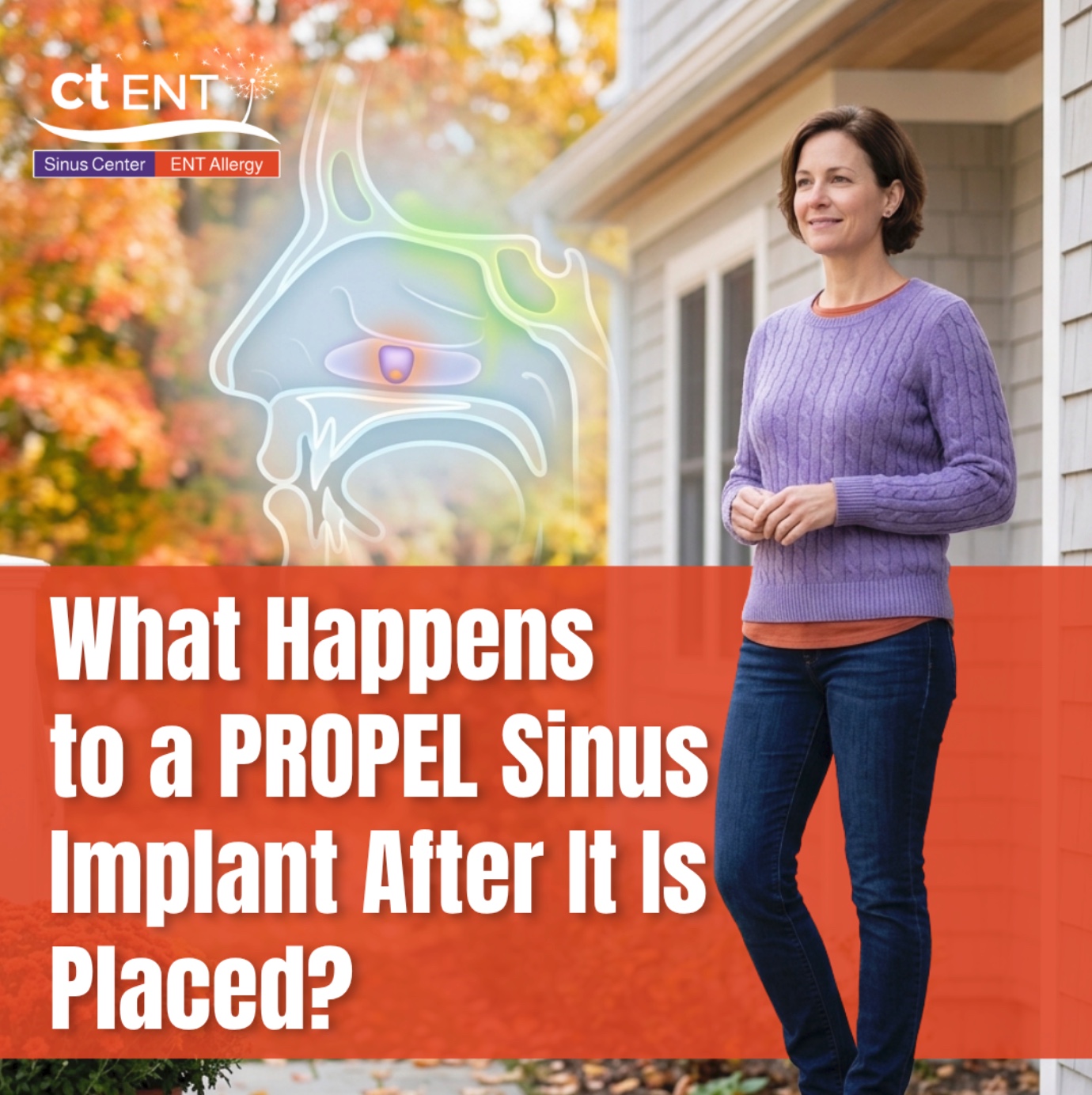
At CT-ENT in Greenwich, patients considering sinus treatment often ask whether a PROPEL® sinus implant remains inside the nose permanently or must be removed later. PROPEL is designed as a temporary, bioabsorbable implant. It supports the treated sinus passage, gradually releases anti-inflammatory medication, and then breaks down as healing progresses.
Understanding what the implant does during the first several weeks can make the recovery process feel less uncertain.
Direct Answer: What Happens to a PROPEL Implant?
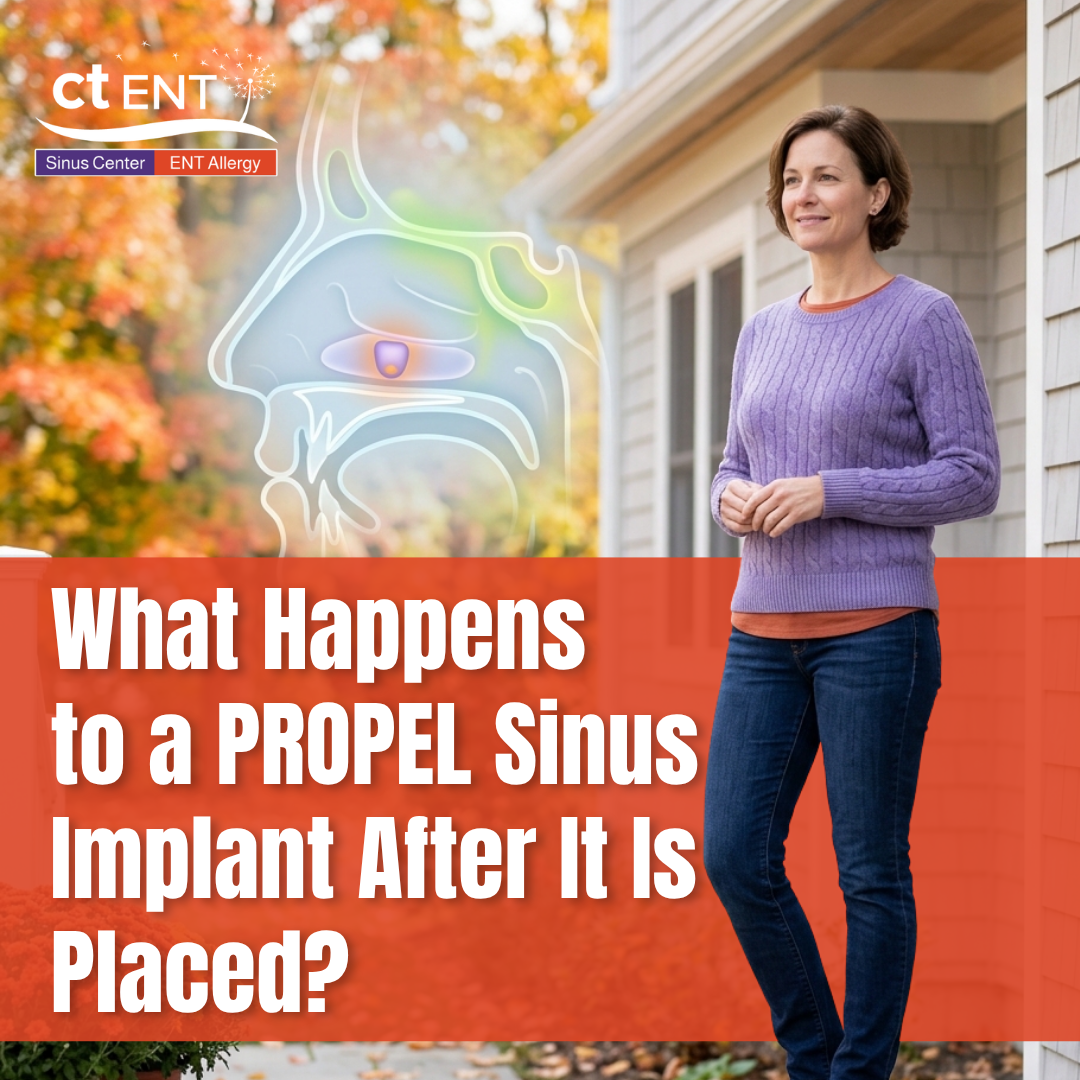
After being placed during sinus surgery, a PROPEL implant temporarily supports the treated sinus passage and gradually releases the corticosteroid mometasone furoate into the surrounding tissue.
The implant is bioabsorbable, so it is not intended to remain permanently. It gradually softens and breaks down as the sinus heals. Routine surgical removal is generally unnecessary, although an ENT may remove remaining material during postoperative care when clinically appropriate.
Why Is a PROPEL Implant Used After Sinus Surgery?
Sinus surgery may be performed to open obstructed sinus pathways and improve ventilation and drainage. The tissues inside the sinuses still need time to heal after the procedure.
During recovery, swelling, inflammation, scarring, or adhesions can narrow a newly opened sinus passage. The PROPEL sinus implant is designed to assist during this early healing period.
The implant has two primary functions:
- It provides temporary structural support to help maintain the surgically opened passage.
- It gradually delivers mometasone furoate, a corticosteroid that reduces inflammation, directly to the surrounding sinus tissue.
This combination allows the implant to support the treated area while delivering medication where postoperative inflammation is occurring.
Does the Implant Stay in Your Nose Permanently?
No. PROPEL is a bioabsorbable implant and is not designed to remain in the sinuses permanently.
The medication is gradually released over approximately 30 days. During and after that period, the implant’s material softens and breaks down as part of the bioabsorption process.
The exact experience can depend on the PROPEL model used, the location in which it was placed, the sinus procedure performed, and the individual healing response. Your ENT can explain what to expect based on the specific implant selected for your procedure.
Will You Feel the Implant Dissolving?
Most patients should not expect to feel the implant suddenly dissolve or fall out as a single solid piece. Bioabsorption is a gradual process.
During postoperative healing, you may notice congestion, drainage, crusting, pressure, or changes in airflow. These symptoms may be related to the sinus procedure and normal tissue healing rather than the implant alone.
Small pieces of material may occasionally become part of nasal drainage or be cleared during postoperative care. Avoid pulling at anything inside the nose unless your surgeon has specifically instructed you to do so.
Contact the clinical team if you experience unexpected or worsening symptoms instead of assuming they are a normal part of the implant breaking down.
What Is the Implant Doing During Recovery?
The first several weeks after sinus surgery are an important part of the healing process. Tissue may remain inflamed, and the body may begin forming scar tissue as the surgical area heals.
During this period, the implant’s spring-like structure helps separate and support the surrounding tissues. This is intended to reduce the likelihood that swollen tissues or adhesions will narrow the newly opened passage.
At the same time, the implant gradually releases mometasone furoate into the nearby tissue. This targeted delivery provides anti-inflammatory medication at the surgical site rather than relying only on medication that must travel throughout the body.
The implant does not guarantee that swelling, scarring, or recurrent sinus symptoms will be prevented. Its purpose is to support postoperative healing in appropriately selected patients.
Will the Implant Need to Be Removed?
Routine surgical removal is generally not required because the implant is designed to be bioabsorbed. However, that does not mean postoperative appointments are unnecessary.
Follow-up visits allow the ENT to:
- Examine how the surgical area is healing.
- Clear crusting or accumulated mucus when appropriate.
- Look for signs of infection, bleeding, or excessive inflammation.
- Monitor whether the sinus passage remains open.
- Address remaining implant material if necessary.
- Review medications and nasal-care instructions.
An ENT may remove or reposition the implant or remaining material if the clinical situation requires it. Patients should attend recommended follow-up appointments even if recovery appears to be progressing normally.
What Might You Notice After Placement?
Recovery experiences vary depending on the sinus condition, the extent of surgery, and the individual healing response.
Temporary postoperative symptoms may include:
- Nasal congestion.
- Mild facial pressure or discomfort.
- Bloody or discolored drainage.
- Nasal crusting.
- A temporary change in smell.
- Changes in how air moves through the nose.
Your surgeon may provide instructions concerning saline rinses, prescribed medications, nose blowing, physical activity, and follow-up care. Those instructions should take priority over general recovery information.
Contact your healthcare provider if you develop worsening pain, significant or persistent bleeding, fever, vision changes, swelling around the eyes, difficulty breathing, or symptoms that concern you.
What Happens After the Implant Breaks Down?
Once the implant has released its medication and provided temporary support, its material is gradually absorbed or cleared. The goal is for the surgically treated sinus passage to remain open because of the surgical changes and successful healing—not because a permanent device continues holding it open.
Long-term results depend on several factors, including:
- The underlying sinus condition.
- The extent of inflammation before surgery.
- The presence of nasal polyps or allergies.
- The procedure that was performed.
- Adherence to postoperative instructions.
- The individual healing response.
The implant is one part of postoperative care. It does not eliminate the need to manage chronic inflammation or other factors that contributed to the original sinus problem.
Are There Risks Associated With PROPEL?
As with any implanted medical device, PROPEL has potential risks and is not appropriate for every patient.
Possible risks may include:
- Pain or pressure.
- Nosebleeds.
- Infection.
- Sinus inflammation.
- Implant displacement.
- Crusting or irritation.
- Side effects associated with intranasal mometasone furoate.
PROPEL should not be used in patients with certain sensitivities to mometasone furoate or the implant’s materials. An ENT can review the indications, contraindications, and potential risks before surgery.
Is a PROPEL Implant Appropriate for Everyone?
No. PROPEL is intended for use in appropriate adult patients following certain sinus procedures. Whether it may be beneficial depends on the area being treated, the surgical approach, the patient’s anatomy, and relevant medical history.
The decision may also be influenced by the presence of chronic sinusitis, nasal polyps, extensive inflammation, previous sinus surgery, or other factors that could affect healing.
An evaluation with an ENT specialist in Greenwich can help determine whether medical management, sinus surgery, a drug-eluting implant, or another treatment approach may be appropriate.
Support for the Sinuses During Early Healing
A PROPEL sinus implant is designed to be temporary. After placement, it supports the treated sinus passage and gradually releases anti-inflammatory medication during the early healing period. The material then breaks down over time instead of remaining as a permanent implant.
Routine surgical removal is generally unnecessary, but postoperative appointments remain an important part of monitoring healing and addressing any concerns.
Contact CT-ENT in Greenwich to learn whether sinus surgery and a PROPEL implant may be appropriate for your condition and what to expect during recovery.
