
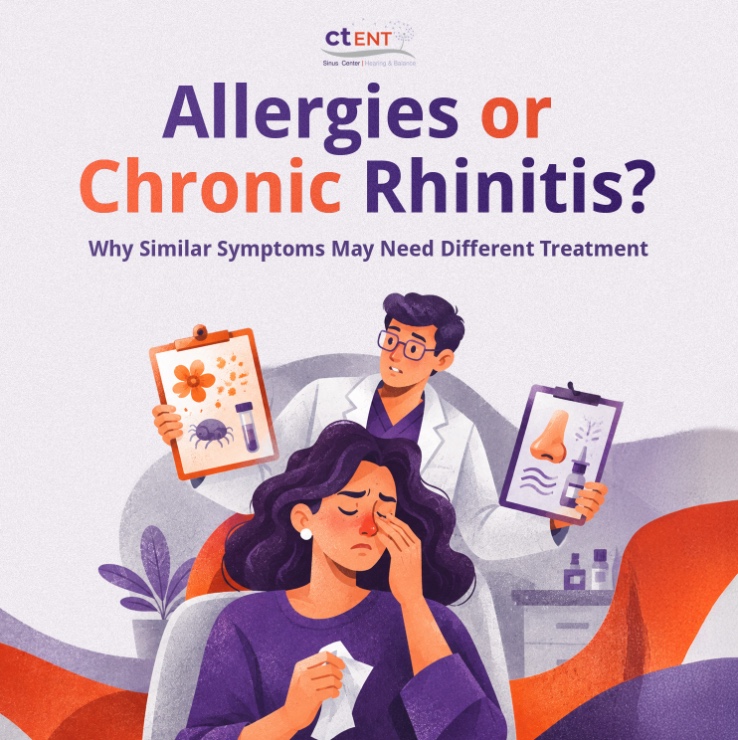
Allergies or Chronic Rhinitis? Why Similar Symptoms May Need Different Treatment
Your nose starts running when you step outside, or maybe you wake up congested almost every morning. You've tried allergy medication, but it doesn't seem to help much. Now you're wondering whether you're dealing with stubborn allergies or something else entirely.
The tricky part is that several nasal conditions can cause nearly identical symptoms. Sneezing, congestion, and postnasal drip aren't always signs of an allergic reaction.
At CT-ENT, we help patients in Norwalk, Greenwich, and surrounding Fairfield County communities understand what's behind their persistent nasal symptoms. Knowing whether allergies, nonallergic rhinitis, or a combination of both is responsible can make a difference in choosing the right treatment.
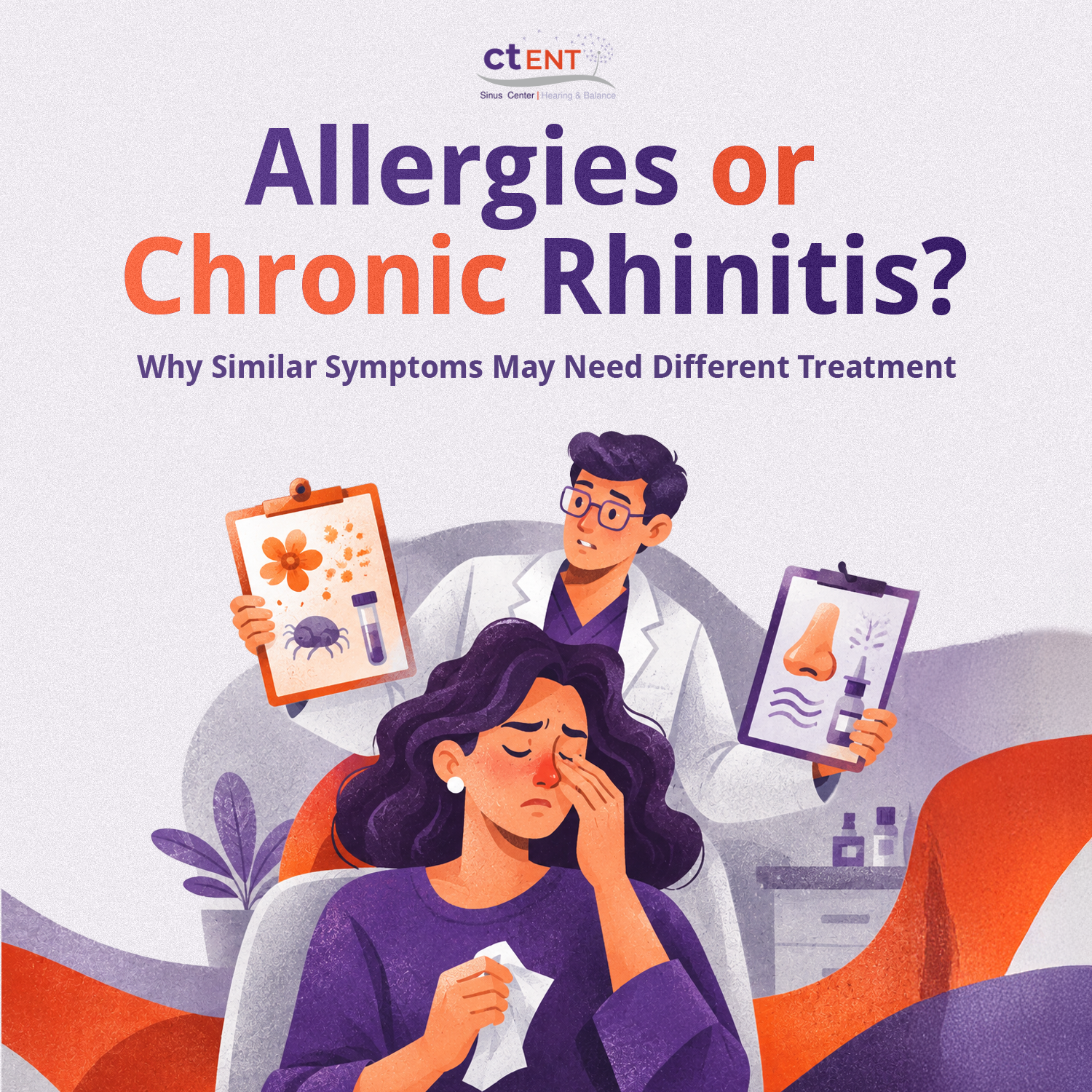
What's the Difference Between Allergies and Chronic Rhinitis?
Allergic rhinitis occurs when your immune system reacts to allergens such as pollen, dust mites, or pet dander. Chronic rhinitis is a broader term for ongoing nasal inflammation that may be allergic, nonallergic, or both.
Nonallergic rhinitis can produce similar congestion and drainage without an allergic immune response. Because the underlying triggers differ, treatments that help allergies may not work as well for nonallergic symptoms.
What Is Allergic Rhinitis?
Allergic rhinitis, commonly called hay fever, develops when your immune system reacts to something that is usually harmless.
When you encounter an allergen, your body releases histamine and other inflammatory chemicals. These can cause swelling inside your nose, increased mucus production, and familiar allergy symptoms.
Common triggers include:
- Tree, grass, and weed pollen
- Dust mites
- Pet dander
- Mold spores
Some people experience seasonal symptoms, particularly when pollen levels increase. Others have year-round allergies because they're regularly exposed to indoor triggers.
In Fairfield County, seasonal pollen and changing outdoor conditions can make symptoms more noticeable throughout different parts of the year.
Allergic rhinitis commonly causes sneezing, nasal itching, watery eyes, and congestion. However, the symptoms aren't always predictable, and some people experience persistent nasal blockage without much itching.
What Is Nonallergic Chronic Rhinitis?
Nonallergic rhinitis causes nasal symptoms without the typical allergic immune response.
Instead of reacting to an allergen, your nose may become overly sensitive to environmental changes, irritants, or certain medications.
For example, your nose might start running when you walk into cold air, smell a strong perfume, or eat something spicy.
Other possible triggers include:
- Cigarette smoke and air pollution
- Strong fragrances or cleaning products
- Changes in temperature or humidity
- Hot or spicy foods
- Certain medications
- Hormonal changes
- Overuse of medicated decongestant nasal sprays
Nonallergic rhinitis can cause ongoing congestion, postnasal drip, and a runny nose. Itching and watery eyes are generally less common than with allergic rhinitis.
Some forms are also called vasomotor rhinitis, although nonallergic rhinitis includes several different conditions.
For many patients, the most frustrating part is that symptoms can appear without warning, even when they haven't been exposed to a known allergen.
Can You Have Allergic and Nonallergic Rhinitis at the Same Time?
Yes. Some people have mixed rhinitis, which means both allergic and nonallergic triggers contribute to their nasal symptoms.
For example, pollen may cause sneezing and itchy eyes, while cold air or strong odors trigger additional congestion and drainage.
In these cases, treating allergies alone may not fully control symptoms. Your provider may need to address both types of triggers.
How Can You Tell Which Type of Rhinitis You Have?
The symptoms overlap, so it's not always possible to tell the difference based on congestion alone. However, certain patterns can offer useful clues.
Signs That Point Toward Allergic Rhinitis
Allergies may be more likely when you notice:
- Frequent sneezing with an itchy nose
- Red, itchy, or watery eyes
- Symptoms that worsen during pollen season
- Congestion after exposure to pets or dusty environments
- Similar reactions whenever you encounter a particular allergen
For example, if your symptoms consistently worsen after spending time around a cat, an allergic trigger may be involved.
Signs That Point Toward Nonallergic Rhinitis
Nonallergic rhinitis may be more likely when:
- Your nose runs in cold weather
- Strong smells trigger congestion
- Spicy foods cause watery nasal drainage
- Symptoms occur without itchy eyes or nasal itching
- Ordinary oral allergy medications provide little relief
A runny nose triggered by eating or walking into cold air is one example of how nonallergic nasal responses can differ from typical seasonal allergies.
Still, these patterns aren't enough to confirm a diagnosis. An ENT evaluation can help identify what may be contributing to your symptoms.
Why Does the Difference Matter for Treatment?
You might wonder why identifying the exact cause matters when both conditions leave you feeling congested.
The answer is that different types of rhinitis don't always respond to the same medications.
Someone with pollen allergies may benefit from an antihistamine or allergy immunotherapy. Someone whose nose runs whenever they eat may need a treatment that targets excess mucus production instead.
Treating every runny nose as an allergy may mean spending months trying medications that don't address the actual problem.
That's why understanding your symptoms and triggers should come before assuming which treatment will work.
How Does an ENT Diagnose Allergic or Nonallergic Rhinitis?
Your ENT provider will usually begin by reviewing your symptoms and medical history.
They may ask when your congestion started, whether it occurs year-round, what seems to trigger it, and which medications you've tried.
A nasal examination can help identify swelling or other findings that may explain your symptoms.
Allergy Testing
If an allergic cause is suspected, your provider may recommend allergy testing.
Skin prick testing and allergen-specific IgE blood testing can identify sensitivities to substances such as pollen, mold, or dust mites.
However, a positive result doesn't automatically mean that allergen is responsible for your symptoms. Your provider must consider whether the results match your history and exposure patterns.
Additional Nasal Evaluation
If symptoms are persistent or don't match a typical allergy pattern, your ENT specialist may look for other nasal or sinus conditions.
A nasal endoscopy may be recommended in certain situations to examine the nasal passages more closely.
CT imaging isn't routinely needed to diagnose uncomplicated rhinitis, but it may be appropriate when another sinus condition is suspected.
Treatment Options for Allergic Rhinitis
The goal of allergic rhinitis treatment is to reduce your reaction to allergens and manage inflammation.
Depending on your symptoms, your provider may recommend several approaches.
Reducing Exposure to Allergens
If testing identifies a likely trigger, practical changes may help reduce your exposure.
For example, patients with dust mite allergies may benefit from protective bedding covers. Those with pollen allergies may find it helpful to monitor pollen levels and limit exposure during particularly high-pollen periods.
Allergy Medications
Oral antihistamines can help relieve symptoms such as sneezing and itching.
Nasal corticosteroid sprays are commonly recommended for persistent allergic rhinitis because they reduce inflammation inside the nose.
Nasal antihistamine sprays may also be useful, depending on the symptoms and severity.
Allergy Immunotherapy
For certain patients, allergy immunotherapy may help reduce sensitivity to specific allergens over time.
At CT-ENT, allergy treatment options include injections and sublingual allergy drops.
These approaches require appropriate patient selection and ongoing treatment. Compounded allergy drops are used off-label in the United States and are not FDA-approved products.
Immunotherapy targets allergic sensitivity, so it isn't a treatment for purely nonallergic rhinitis.
How Is Nonallergic Chronic Rhinitis Treated?
Because nonallergic rhinitis doesn't involve the same allergic immune response, treatment often focuses on reducing nasal sensitivity, inflammation, or excess mucus production.
Your provider may recommend:
- Avoiding known irritants: Limiting exposure to smoke, strong fragrances, or temperature changes when possible.
- Saline nasal sprays or rinses: Helping clear irritants and keep the nasal passages moist. Use distilled, sterile, or previously boiled and cooled water for nasal rinsing.
- Nasal corticosteroid or antihistamine sprays: Managing symptoms in certain forms of nonallergic rhinitis.
- Ipratropium nasal spray: Reducing excessive watery nasal drainage, particularly when a runny nose is the main complaint.
Treatment depends on which symptoms bother you most and how you've responded to previous medications.
Why Aren't Allergy Medications Helping My Runny Nose?
Allergy medications may provide limited relief if your symptoms are primarily caused by nonallergic rhinitis rather than an allergic reaction.
However, some treatments, including nasal corticosteroid and nasal antihistamine sprays, can help both conditions.
If you're taking medication regularly without much improvement, an ENT evaluation can help determine whether the diagnosis or treatment approach needs to change.
Can Chronic Rhinitis Be Treated With an In-Office Procedure?
For some patients with persistent symptoms despite appropriate medical treatment, an in-office procedure may be worth considering.
CT-ENT offers ClariFix cryotherapy, a minimally invasive treatment designed to reduce symptoms of chronic rhinitis.
Rather than treating allergens, ClariFix uses controlled cooling to target nerves inside the nasal passages that contribute to excessive mucus production and congestion.
This approach may help selected patients with allergic, nonallergic, or mixed chronic rhinitis who haven't experienced sufficient relief from medications.
However, it's not appropriate for everyone, and improvement isn't guaranteed. Potential risks include temporary discomfort, bleeding, crusting, or other procedure-related effects.
An ENT specialist can determine whether ClariFix treatment for chronic rhinitis may be suitable based on your symptoms and medical history.
When Should You See an ENT for Persistent Nasal Symptoms?
If your nose has been congested or running for weeks, it's worth finding out why, especially when over-the-counter medications haven't helped.
Consider an ENT evaluation if:
- You experience congestion or nasal drainage almost every day
- Symptoms interfere with sleep, work, or daily activities
- You aren't sure what triggers your symptoms
- Your usual allergy medications no longer seem effective
- Postnasal drip or nasal irritation keeps returning
- You've developed new symptoms that weren't present before
Persistent symptoms on one side of the nose, particularly with repeated bleeding, should also be evaluated rather than assumed to be allergies.
Frequently Asked Questions
Is chronic rhinitis the same as chronic sinusitis?
No. Rhinitis primarily affects the lining of the nose, while chronic sinusitis involves persistent inflammation of the sinuses. The two conditions can occur together, but diagnosis and treatment may differ.
Can nonallergic rhinitis develop later in life?
Yes. Nonallergic rhinitis is common in adults and may develop or become more noticeable with age.
Can allergy testing detect nonallergic rhinitis?
Allergy testing doesn't directly diagnose nonallergic rhinitis. However, it can help identify or rule out allergic sensitization as a possible contributor to symptoms.
Can you have chronic rhinitis without sneezing?
Yes. Some people mainly experience persistent congestion, watery drainage, or postnasal drip without frequent sneezing.
Is chronic rhinitis curable?
Symptoms can often be managed, but long-term outcomes depend on the cause. Some people improve with medications and trigger management, while others need continued treatment or additional evaluation.
Don't Let Persistent Nasal Symptoms Become Your New Normal—Get Answers at CT-ENT!
If your nose seems constantly congested or runny, you don't have to assume it's just another allergy flare-up.
Allergic and nonallergic rhinitis can feel remarkably similar, but understanding what's causing your symptoms may help you find a more appropriate treatment.
At CT-ENT, our team evaluates persistent nasal congestion, postnasal drip, allergies, and chronic rhinitis for patients throughout Norwalk, Greenwich, and surrounding Fairfield County communities.
Whether you need allergy testing, medication management, or an evaluation for another treatment option, we can help you understand what may be contributing to your symptoms.
